
Holter Monitor at Home
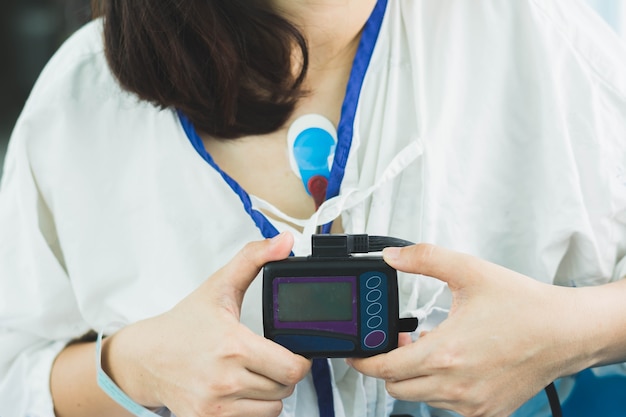
Create a requestA Holter monitor is a compact, wearable device that continuously records the heart's rhythms for 24 to 72 hours. It is used to detect irregularities in heartbeats that are not found during a regular ECG exam.
General
The Holter monitor is a type of ambulatory electrocardiography device, a portable ECG that records the electrical activity of the heart while the patient goes about their usual daily activities. Unlike a standard ECG, which only captures a moment in time, a Holter monitor provides a prolonged record of the heart's rhythm, offering a more comprehensive view of heart function. This is crucial for identifying intermittent arrhythmias or other cardiac symptoms that may not show up during a brief ECG test. Patients are required to wear the device continuously, even while sleeping. The only major limitation is the inability to get the monitor wet, restricting showering or swimming during the monitoring period.
Special Details
Who is it for?
Patients experiencing symptoms such as dizziness, palpitations, fainting, or unexplained stroke, suggesting irregular heart rhythms.
Individuals with a personal or family history of heart disease.
Patients who require monitoring for known heart conditions, to evaluate the effectiveness of treatments or to adjust medications.
People who have undergone procedures affecting heart rhythm, to ensure no new or exacerbated conditions have arisen.
Recovery Period
The procedure itself is non-invasive and requires no recovery time.
The monitoring period typically lasts from 24 to 72 hours, after which the patient returns the device to the healthcare provider for data analysis.
Results are usually available a few days to a week after the monitor is returned.
Potential Risks and Side Effects
Skin irritation or rash from the adhesive used to attach electrodes.
Potential inconvenience or discomfort from wearing the device continuously, including while sleeping.
Alternative Treatments
Event monitor or loop recorder for less frequent symptoms.
Echocardiogram for structural heart issues.
Implantable loop recorder for long-term monitoring.
Standard ECG for specific circumstances where a snapshot of heart activity is sufficient.
Success Rate
The Holter monitor has a high success rate in detecting abnormal heart rhythms and guiding the subsequent management of various cardiac conditions. However, its effectiveness can depend on patient adherence to wearing the device properly and continuously.
Procedure step-by-step overivew
Initial consultation with a healthcare provider to determine if the Holter monitoring is suitable.
Application of electrodes to the chest and attachment of the recording device by a technician or nurse.
The patient is instructed on how to wear the device and maintain the electrodes attached.
Continuous wearing of the device for a prescribed duration, typically 24 to 72 hours.
Return of the device to the healthcare provider for data download and analysis.
Follow-up appointment to discuss the findings and next steps.
Prices
Turkey
$200 - $400
Czech Republic
$150 - $350
Croatia
$180 - $300
Lithuania
$100 - $250
Poland
$150 - $300
Germany
$250 - $500
Switzerland
$300 - $600
France
$200 - $400
United Kingdom
$250 - $500
United States
$300 - $700
Canada
$200 - $500
Australia
$250 - $550
Why Do Prices Vary?
The duration of the rental for the Holter monitor.
The healthcare provider or facility fees.
Insurance coverage and copayment requirements.
Any additional consultations or follow-up care needed after the monitoring period.
Related Blog Posts
