
Thulium Laser Prostate Surgery
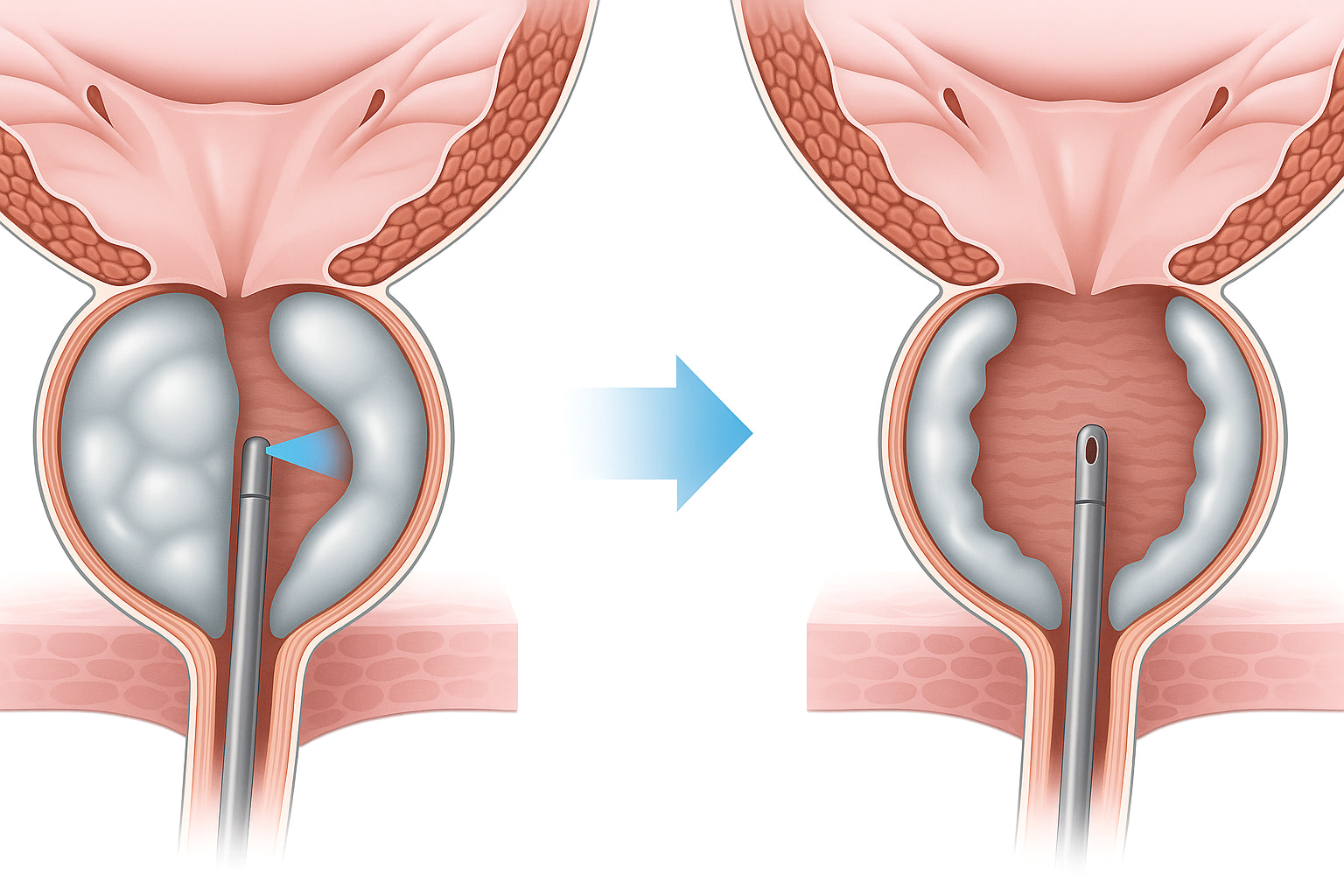
Create a requestThulium Laser Resection of the Prostate (TURP) is a minimally invasive surgical procedure used to treat urinary problems due to an enlarged prostate. The thulium laser technique involves using a laser to remove prostate tissue blocking the urethra, resulting in improved urine flow and alleviation of symptoms.
General
The Thulium Laser Resection (TURP) is increasingly being preferred for its precision and reduced risk of complications. By focusing a high-intensity thulium laser on the prostate tissue that obstructs the urethra, the technique allows for precise cutting and removal of tissue with minimal bleeding. This method is particularly effective as it seals blood vessels instantaneously, reducing the risk of postoperative bleeding. It's suitable for patients with larger prostate glands or those on anticoagulants. Additionally, the procedure is well-regarded for its rapid recovery times compared to traditional methods. Patients generally experience a significant improvement in symptoms following the procedure, including reduced urgency, improved stream, and less nocturnal urination. The procedure is performed under general or spinal anesthesia, and most patients can return home the same day or the following day. Recovery involves avoiding strenuous activity and ensuring adequate hydration, with most men returning to normal activity levels within a week.
Special Details
Who is it for?
Men experiencing urinary retention due to benign prostatic hyperplasia (BPH).
Patients who have not had relief from medication.
Men experiencing recurrent urinary tract infections, bladder stones, or bleeding from the prostate.
Patients who are suitable for surgery and prefer a minimally invasive option.
Recovery Period
Most patients are discharged the same day or the next.
Full recovery usually occurs within 4-6 weeks, with gradual improvement in symptoms.
Potential Risks and Side Effects
Urinary tract infections
Temporary difficulty urinating
Rarely, erectile dysfunction
Urethral stricture (narrowing of the urethra)
Alternative Treatments
Traditional TURP
Open prostatectomy
Medications (e.g., alpha blockers, 5-alpha reductase inhibitors)
Minimally invasive therapies (e.g., UroLift, Rezūm)
Success Rate
Success rates are high, with over 90% of patients experiencing significant symptom improvement.
Procedure step-by-step overivew
Pre-operative assessment to determine procedure suitability and plan.
Administration of general or spinal anesthesia.
Insertion of a cystoscope through the urethra.
Introduction of a thulium laser fiber through the cystoscope to reach the prostate.
Precise laser resection of obstructing prostate tissue.
Removal of resected tissue.
Postoperative care, including catheter placement if necessary, and monitoring for complications.
Prices
Turkey
$2,500
Czech Republic
$3,000
Croatia
$3,500
Lithuania
$3,000
Poland
$3,200
Germany
$7,500
Switzerland
$10,000
France
$7,000
United Kingdom
$8,000
United States
$15,000
Canada
$12,000
Australia
$9,000
Why Do Prices Vary?
The geographical location of the medical facility.
Experience and expertise of the surgeon.
Type of healthcare facility (private vs. public).
Additional fees, including hospital stay, anesthesia, and postoperative care.