
Robotic Hair Transplantation
Create a requestRobotic Hair Transplantation is a state-of-the-art, minimally invasive hair restoration procedure that uses advanced robotic technology to assist in harvesting hair follicles and transplanting them to balding areas. This technique offers precision, reduced healing time, and less discomfort compared to traditional hair transplant methods.
General
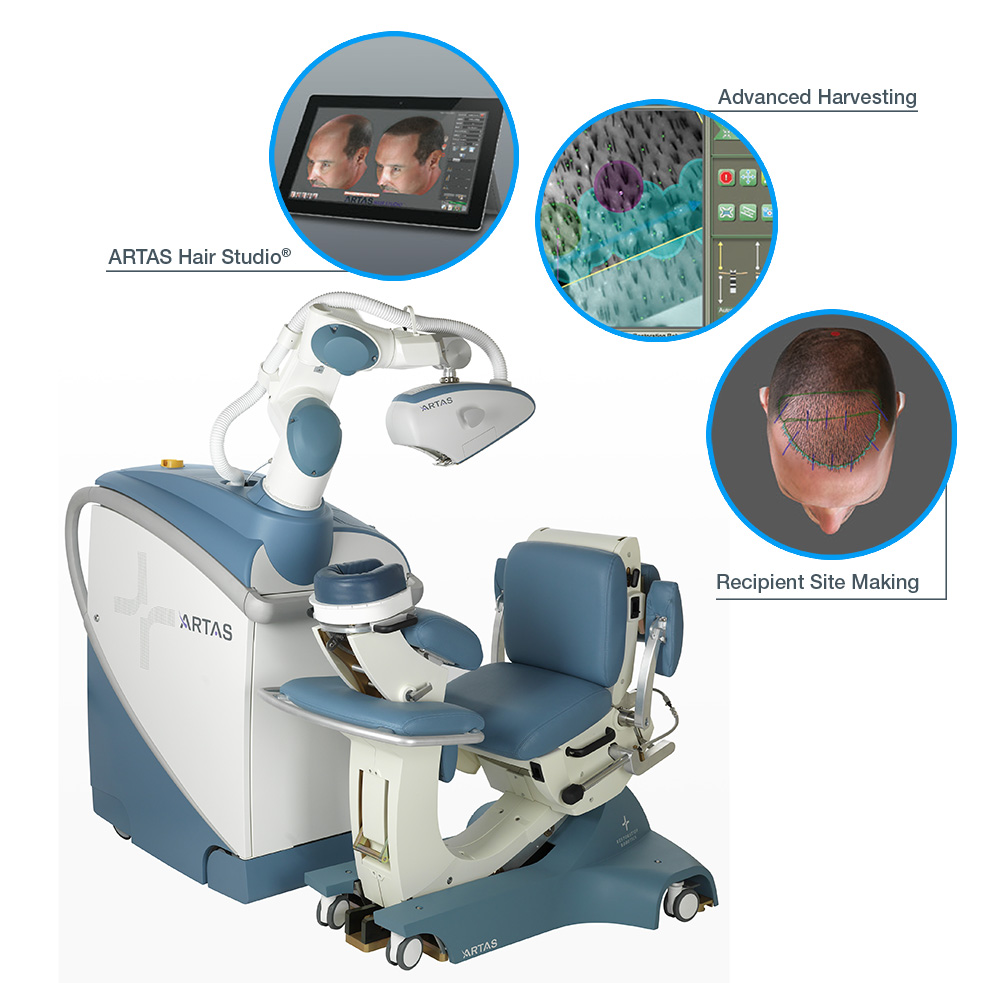
Robotic Hair Transplantation involves the use of the ARTAS system, a sophisticated robotic device designed specifically for hair restoration. The technology enables surgeons to extract hair follicles with precise control and accuracy from the donor area, usually the back of the head, which is typically resistant to balding. These follicles are then transplanted to the recipient area where hair is thinning or balding, ensuring natural-looking results. The use of robotics allows for higher graft survival rates, faster procedures, and minimizes human error, making the process more efficient and effective compared to manual techniques. The minimally invasive nature of the procedure means patients can expect a quicker recovery period, minimal scarring, and a lower risk of complications, alongside the aesthetic benefits of a fuller head of hair.
Special Details
Who is it for?
Individuals experiencing moderate to severe hair loss
Candidates with sufficient hair density in the donor area
People looking for a minimally invasive solution to hair loss
Individuals who prefer precise and technologically advanced treatment options
Recovery Period
The procedure usually takes 4-8 hours depending on the extent of hair loss
Recovery time is relatively short, with most patients returning to their routine within a couple of days
Full recovery and hair growth can be noticed within 6 to 12 months post-procedure
Potential Risks and Side Effects
Temporary numbness or discomfort in the treated areas
Risk of infection, although minimal due to the procedure's precision and cleanliness
Possible scarring in the donor area, though significantly less than with traditional methods
Rare chances of hair follicle damage leading to unsatisfactory results
Alternative Treatments
Manual FUE (Follicular Unit Extraction)
FUT (Follicular Unit Transplantation)
Scalp Micropigmentation
Medications like Minoxidil or Finasteride
PRP (Platelet-rich Plasma) Therapy
Success Rate
Robotic Hair Transplantation boasts a high success rate, with over 90% of transplanted hair usually fully growing back within the expected time frame.
Procedure step-by-step overivew
Initial consultation to assess candidacy and discuss goals
Pre-operative preparation and scalp mapping
Administration of local anesthesia to minimize discomfort
Extraction of hair follicles using the robotic system
Preparation and preservation of follicles for transplantation
Implantation of hair follicles into the recipient areas
Post-operative care instructions and follow-up appointments
Prices
Turkey
$2,200 - $4,500
Czech Republic
$3,000 - $6,000
Croatia
$2,800 - $5,000
Lithuania
$2,500 - $4,500
Poland
$2,500 - $5,000
Germany
$5,500 - $10,000
Switzerland
$7,000 - $12,000
France
$6,000 - $9,000
United Kingdom
$6,500 - $10,000
United States
$7,000 - $15,000
Canada
$7,000 - $14,000
Australia
$6,000 - $12,000
Why Do Prices Vary?
Technology and equipment used
Number of grafts needed
Experience and expertise of the surgeon
Geographic location of the clinic
Additional treatments or services included in the package