
Percutaneous Nephrolithotomy (PNL)
Create a requestPercutaneous Nephrolithotomy (PNL) is a minimally invasive surgical procedure used to remove kidney stones that cannot be treated with other methods. By making a small incision in the patient's back, surgeons use a special instrument to remove the stones directly from the kidney, offering an effective treatment option for larger stones or stones that resist other treatments.
General
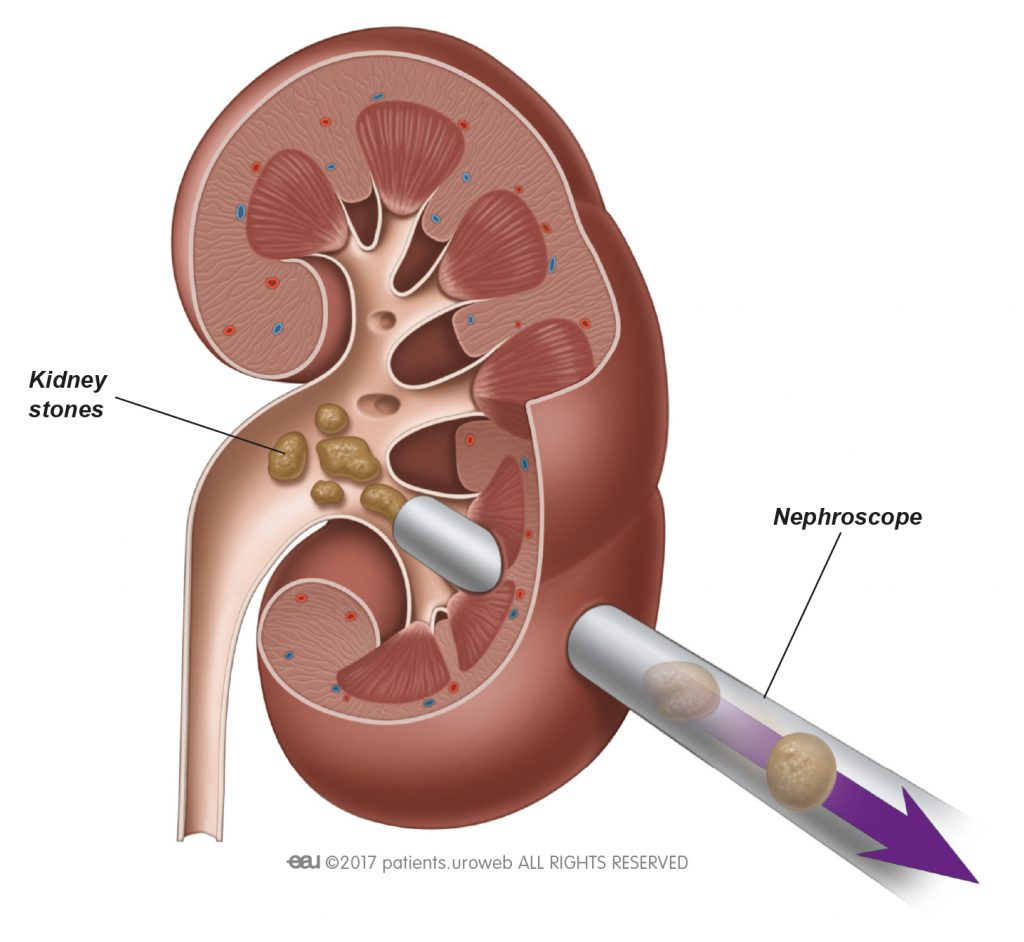
Percutaneous Nephrolithotomy (PNL) is typically recommended for patients with large kidney stones (larger than 2 cm) that cannot be broken down through less invasive methods such as shock wave lithotripsy or that are too large to pass naturally. The procedure involves making a small incision in the back through which a nephroscope is inserted directly into the kidney. The surgeon then uses this scope to locate and remove the stones, sometimes employing laser or pneumatic devices to break them into smaller, more manageable pieces. This technique offers a direct approach to removing kidney stones, minimizing damage to surrounding tissues and resulting in shorter recovery times compared to traditional open surgery. Patients usually require a hospital stay and are under general anesthesia during the procedure.
Special Details
Who is it for?
Patients with kidney stones larger than 2 cm
Individuals who have stones that are too large to pass naturally
Patients whose stones have not responded to other treatments, such as shock wave lithotripsy
Individuals with struvite stones, which are often larger and caused by infections
Recovery Period
Most patients can expect to spend 1 to 2 days in the hospital for monitoring. Full recovery, including the ability to return to normal activities, can take up to 2 weeks.
Potential Risks and Side Effects
Bleeding requiring blood transfusion (though rare)
Infection
Damage to surrounding organs or structures
Need for additional procedures if not all stones are removed successfully
Alternative Treatments
Shock wave lithotripsy for smaller stones
Ureteroscopy, particularly for stones located closer to the bladder
Open surgery, although rarely needed, might be considered for exceptionally large or complex stones
Conservative management, including pain management and attempts to naturally pass smaller stones
Success Rate
The success rate of Percutaneous Nephrolithotomy is generally high, with studies showing a stone-free rate of up to 90% for patients with large renal stones.
Procedure step-by-step overivew
Pre-operative assessment and imaging to locate the stones and plan the procedure.
Administration of general anesthesia.
A small incision is made in the back, through which the nephroscope is inserted.
The nephroscope is navigated to the kidney, and the stones are identified.
Stones are fragmented if necessary and removed through the nephroscope.
A drainage tube may be placed in the kidney to allow fluids to drain post-procedure.
The incision is closed, and the patient is moved to recovery.
Prices
Turkey
$3,000 - $5,000
Czech Republic
$4,000 - $6,000
Croatia
$4,500 - $7,000
Lithuania
$3,500 - $6,000
Poland
$4,000 - $6,000
Germany
$8,000 - $12,000
Switzerland
$10,000 - $15,000
France
$7,000 - $10,000
United Kingdom
$8,000 - $12,000
United States
$15,000 - $30,000
Canada
$8,000 - $12,000
Australia
$7,000 - $10,000
Why Do Prices Vary?
The complexity of the kidney stone(s)
Type of anesthesia used
Hospitalization duration
Geographic location of the hospital or clinic
Surgeon’s experience