
Penile Prosthesis Implantation
Create a requestPenile prosthesis implantation is a surgical procedure aimed at treating erectile dysfunction (ED) in men who have not responded to conventional treatments. During this procedure, a device is implanted into the penis to enable an erection. This treatment is considered when other less invasive options have failed to produce satisfactory results.
General
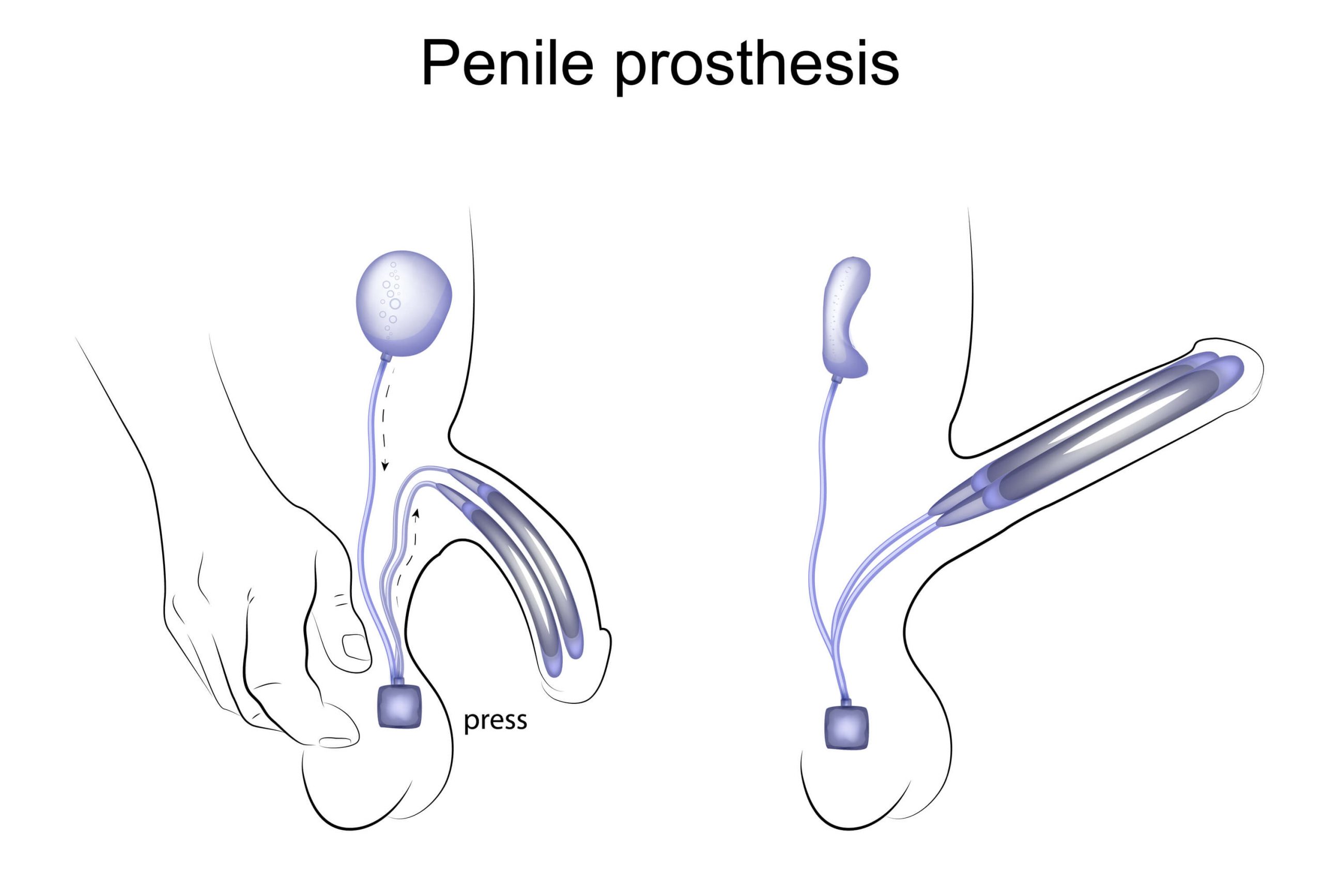
Penile prosthesis implantation is considered a definitive treatment for erectile dysfunction, particularly for men who have not achieved success with medications, injections, or vacuum erection devices. The procedure involves the surgical insertion of a prosthesis into the penis, which can be inflated or bent into position to simulate the natural process of an erection. There are mainly two types of prostheses used: inflatable and malleable. The inflatable prosthesis mimics a natural erection more closely, requiring a simple squeeze of a pump hidden in the scrotum to inflate the rods, while the malleable prosthesis involves bending the rods to achieve an erection. The choice between the two depends on patient preference, medical history, and surgeon recommendation. The objective of penile prosthesis implantation is to restore sexual function and improve the quality of life for men with ED.
Special Details
Who is it for?
Men with erectile dysfunction who have not responded to other treatments such as PDE5 inhibitors, injections, or vacuum devices.
Individuals with a clear medical cause for ED that is unlikely to resolve or improve naturally or with other medical treatments.
Men seeking a long-term solution to erectile dysfunction.
Recovery Period
The procedure usually requires a hospital stay of 1-2 days.
Full recovery from penile prosthesis implantation can take 4-6 weeks, during which sexual activity should be avoided.
Patients can typically return to non-strenuous activities within a few days post-surgery.
Potential Risks and Side Effects
Infection, which could necessitate removal of the prosthesis.
Mechanical failure of the prosthesis over time, possibly requiring revision surgery.
Erosion of the prosthesis through the skin, urethra, or other structures.
Pain or discomfort, particularly in the initial recovery period.
Alternative Treatments
Medical treatments such as PDE5 inhibitors (e.g., Viagra, Cialis).
Vacuum erection devices.
Penile injections.
Lifestyle changes, including diet and exercise.
Psychotherapy or couples counseling.
Success Rate
Studies report high satisfaction rates, with approximately 80-90% of men satisfied with the outcome of the surgery and the improvement in erectile function.
Procedure step-by-step overivew
An initial consultation to discuss the best type of prosthesis and to go over the risks and expectations.
Administration of general anesthesia or spinal anesthesia before the surgery begins.
A small incision is made either at the base of the penis or in the lower abdomen.
The chosen prosthesis is inserted into the penile shaft; inflatable models also have the pump and reservoir placed within the scrotum and abdomen respectively.
Once the device is securely in place, all incisions are closed and dressed.
Postoperative recovery involves hospital rest, monitoring for complications, and eventually, instruction on how to use the device.
Prices
Turkey
$3,000 - $7,000
Czech Republic
$5,000 - $8,500
Croatia
$4,000 - $7,500
Lithuania
$4,500 - $7,000
Poland
$5,000 - $7,500
Germany
$10,000 - $15,000
Switzerland
$15,000 - $20,000
France
$8,000 - $12,000
United Kingdom
$10,000 - $15,000
United States
$15,000 - $25,000
Canada
$8,000 - $12,000
Australia
$10,000 - $15,000
Why Do Prices Vary?
Type of prosthesis (inflatable or malleable) affects the overall cost.
Surgeon's experience and hospital setting can influence the price.
Geographical location and the associated cost of living.
Insurance coverage and available financing options.