
Hysteroscopy
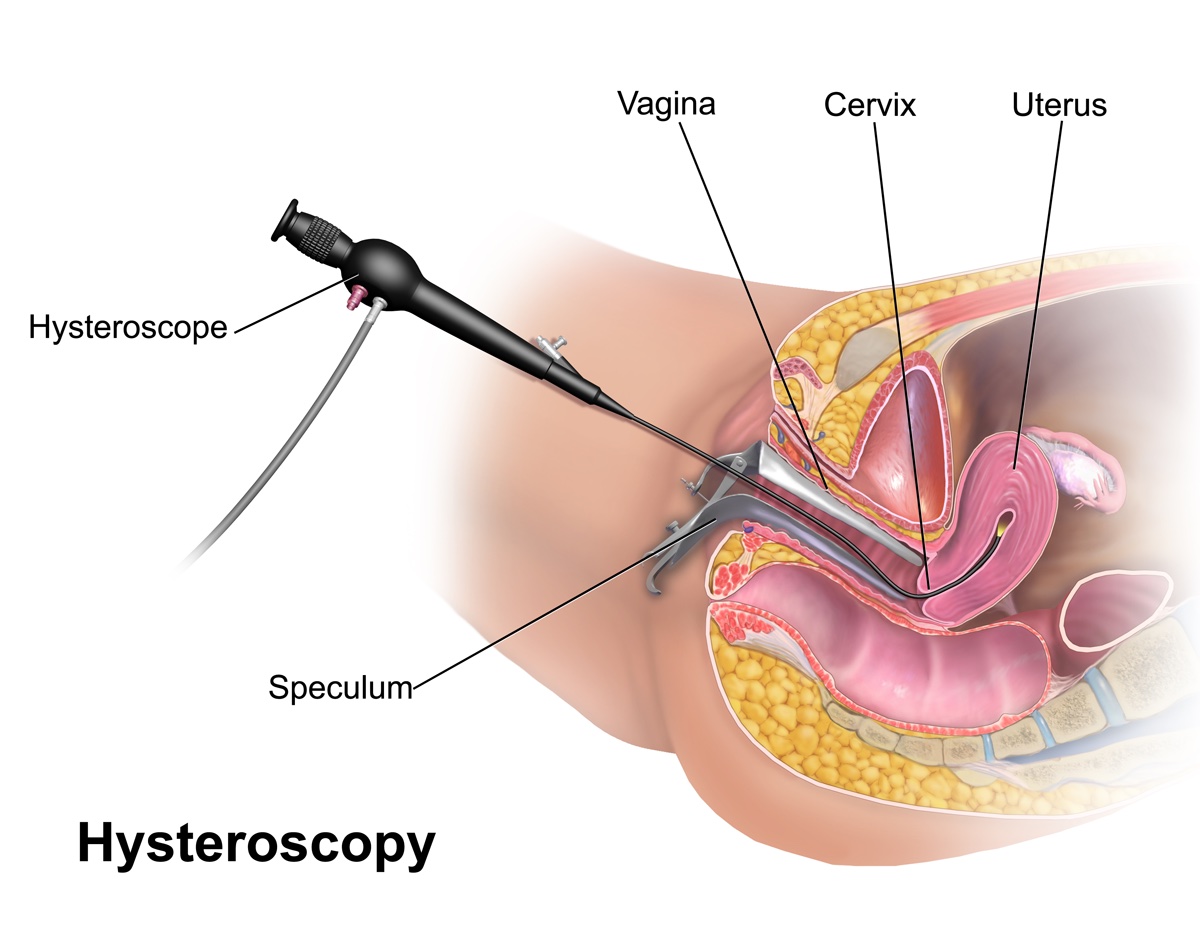
Create a requestHysteroscopy is a medical procedure that allows a doctor to look inside the uterus to diagnose and treat causes of abnormal bleeding. The procedure employs a hysteroscope, a thin, lighted tube that is inserted into the vagina to examine the cervix and inside of the uterus.
General
Hysteroscopy is typically performed using a slim instrument known as a hysteroscope, which is carefully inserted through the cervix into the uterus. A hysteroscope has a light and camera that allows the surgeon to view the uterine lining on a video screen. This procedure can be diagnostic, for investigating symptoms, or operative, for treating conditions. It's frequently used as both a diagnostic tool and a method for minor surgeries such as the removal of polyps, fibroids, and adhesions. During a diagnostic hysteroscopy, the doctor examines the inside of the uterus to diagnose problems. If necessary, an operative hysteroscopy can be performed at the same time to treat conditions found during the diagnostic procedure. This could involve taking a biopsy, removing polyps or fibroids, or performing endometrial ablation. The procedure is usually done on an outpatient basis and can be performed under local, regional, or general anesthesia depending on the extent of the operation and the patient's preference.
Special Details
Who is it for?
Individuals experiencing abnormal uterine bleeding
Women facing issues with fertility or recurrent miscarriages
Patients with uterine abnormalities such as polyps or fibroids
Those requiring the removal of embedded IUDs
Recovery Period
The procedure typically lasts about 30 minutes to 1 hour.
Recovery time varies but most can return to normal activities within 1-2 days.
Some may experience mild cramping or spotting for a few days post-procedure.
Potential Risks and Side Effects
Infection
Bleeding
Injuries to the cervix or uterus
Rare risk of uterine perforation or fluid overload
Alternative Treatments
Ultrasound or MRI scans for diagnostic purposes
Medications to control bleeding or hormonal imbalances
Laparoscopy for certain surgical interventions
Hysterectomy for more severe conditions
Success Rate
The success rates for diagnostic and operative hysteroscopy are high, generally above 90%, depending on the specific condition being treated.
Procedure step-by-step overivew
Preparation of the patient, which may involve anesthesia.
Insertion of the hysteroscope through the vagina and cervix into the uterus.
Insufflation of the uterus with gas or fluid to expand it for a better view.
Examination and treatment of any abnormalities found within the uterus.
Removal of the hysteroscope and completion of the procedure.
Prices
Turkey
$600 - $1000
Czech Republic
$800 - $1300
Croatia
$700 - $1200
Lithuania
$500 - $900
Poland
$650 - $1100
Germany
$2000 - $3500
Switzerland
$2500 - $4500
France
$1800 - $3000
United Kingdom
$1500 - $2500
United States
$3000 - $5000
Canada
$2000 - $4000
Australia
$2500 - $4500
Why Do Prices Vary?
Type of anesthesia used
Whether the procedure is diagnostic or operative
Hospital or clinic where the procedure is performed
Country and healthcare system specifics
Doctor’s expertise and experience