
Breast Reconstruction
Create a requestBreast reconstruction is a surgical procedure that restores the shape, appearance, and size of a breast, primarily following mastectomy for cancer treatment. This procedure can also be performed to correct congenital deformities or after trauma to the breast. It can involve the use of implants, autologous tissue from the patient's own body, or a combination of both.
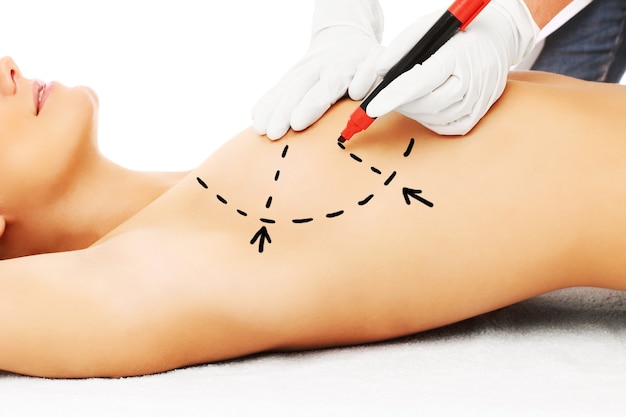
General
Breast reconstruction often plays a crucial role in post-mastectomy recovery, helping to restore not only the physical form but also improving the psychological well-being of patients. The choice between implants and autologous tissue, or a combination thereof, depends on various factors including the patient's body type, health conditions, and personal preferences. The procedure varies in complexity, ranging from simpler implant-based reconstructions to more involved autologous tissue reconstructions that require microsurgical techniques. Post-operative care is crucial and involves monitoring for complications, managing pain, and supporting the healing process. Typically, more than one surgery might be required to achieve the final breast shape, including nipple reconstruction and symmetry procedures.
Special Details
Who is it for?
Individuals who have undergone mastectomy or lumpectomy for breast cancer treatment.
Patients with congenital breast abnormalities.
Victims of traumatic breast injury desiring reconstruction.
Patients seeking reconstruction after preventive mastectomy due to high cancer risk.
Recovery Period
The duration of the procedure depends on the method used, ranging from 1 to 8 hours.
Initial recovery period spans 2 to 6 weeks, with full recovery taking several months.
Activity restrictions and wearing a supportive bra are common post-operative advisories.
Potential Risks and Side Effects
Infection and bleeding.
Scarring and poor wound healing.
Complications from anesthesia.
Implant-related issues including leakage and capsular contracture.
Fatigue grafting failure in autologous reconstructions.
Alternative Treatments
External breast prostheses.
Not opting for reconstruction and embracing the post-mastectomy body.
Fat grafting alone for minor corrections.
Success Rate
The overall success rate of breast reconstruction procedures is high, with satisfaction rates exceeding 80% among patients. Outcomes depend on the technique used, overall health, and adherence to post-operative care.
Procedure step-by-step overivew
Consultation with a plastic surgeon to discuss goals, options, and plan the reconstruction.
Selection of the reconstruction method (implant or autologous tissue) based on the assessment.
The surgery is performed under general anesthesia. For implant-based reconstruction, an expander may be placed first to stretch the skin.
In autologous reconstruction, tissue is harvested from the donor site and transplanted to the chest, sometimes requiring microvascular surgery.
Recovery in hospital for a few days post-surgery, followed by weeks to months of home recovery depending on the procedure complexity.
Follow-up appointments for monitoring and eventual additional surgeries for nipple reconstruction or symmetry correction.
Prices
Turkey
$3,500 - $6,000
Czech Republic
$2,800 - $5,500
Croatia
$3,000 - $6,500
Lithuania
$3,200 - $6,000
Poland
$2,500 - $5,000
Germany
$8,000 - $15,000
Switzerland
$12,000 - $20,000
France
$7,500 - $15,000
United Kingdom
$6,000 - $12,000
United States
$15,000 - $25,000
Canada
$8,000 - $12,000
Australia
$10,000 - $20,000
Why Do Prices Vary?
The choice between implant-based or autologous tissue reconstruction.
Hospital and surgeon’s fees.
Cost of the implants and surgical materials.
Length of hospital stay.
Necessity of subsequent corrective surgeries.
Geographical location where the surgery is performed.