
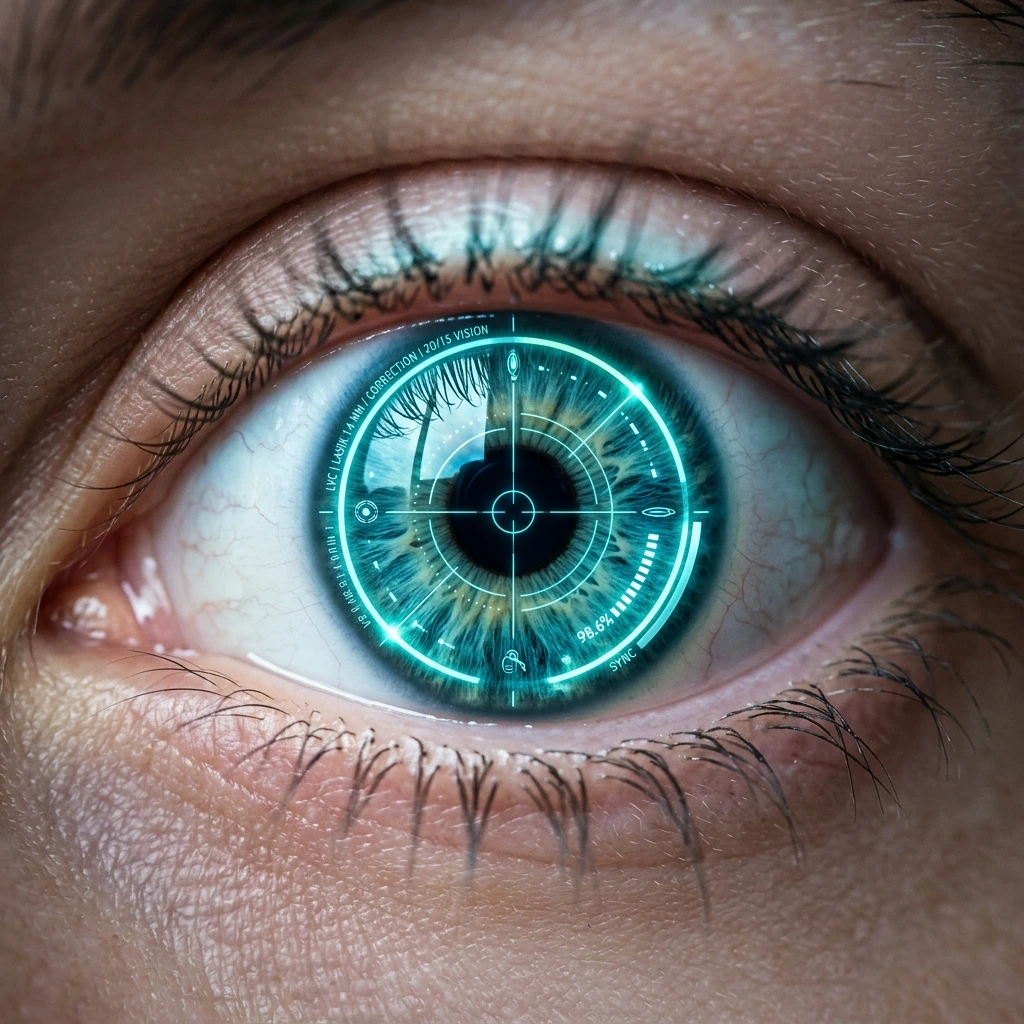
Vision is our primary window to the world. For those heavily reliant on glasses or contact lenses, the dream of waking up with crystal-clear, unassisted vision is a powerful one. For decades, laser eye surgery has offered this promise. However, as we move through 2026, the landscape of ophthalmology has shifted dramatically. It's no longer just about basic LASIK; it's about highly customized, topography-guided laser treatments and revolutionary "Smart Lenses" that correct presbyopia (reading glasses) and cataracts simultaneously.
While these advanced vision correction technologies exist in many developed nations, they are overwhelmingly classified as "elective" or "cosmetic" and are rarely covered by standard health insurance. The high out-of-pocket costs, often exceeding several thousands of dollars per eye, make these life-changing procedures inaccessible to many. This financial barrier has fueled a massive surge in Ophthalmology Tourism.
Through platforms like Healtius, patients are traveling to global centers of excellence to access the most advanced eye care at a fraction of the domestic cost. In this article, we will explore the latest innovations in eye surgery that are driving this travel trend, the concept of "Smart Lenses," and how to navigate the process of getting eye surgery abroad safely.
The Laser Vision Revolution: Beyond Basic LASIK
When most people think of laser eye surgery, they think of LASIK (Laser-Assisted In Situ Keratomileusis), a procedure that has been around for decades. While traditional LASIK is effective, international eye clinics catering to health tourists now predominantly use next-generation, blade-free technologies that offer higher safety profiles and sharper vision.
1. SMILE (Small Incision Lenticule Extraction)
SMILE is widely considered the future of laser vision correction. Unlike LASIK, which requires creating a relatively large "flap" on the surface of the cornea to reshape it, SMILE is a minimally invasive, flapless procedure.
- How it works: A femtosecond laser creates a tiny, lentil-shaped piece of tissue (a lenticule) inside the intact cornea. The surgeon then extracts this lenticule through an incision no larger than 2 millimeters.
- The Advantage: Because there is no flap, the structural integrity of the cornea is better preserved, significantly reducing the risk of post-operative dry eyes. Recovery is faster, and it is highly recommended for patients with active lifestyles or those engaged in contact sports.
2. Topography-Guided Laser Surgery (Contoura Vision)
No two eyes are the same; they are as unique as fingerprints. Traditional lasers treat your eye based solely on your glasses prescription. Topography-guided systems, however, take thousands of measurements of the microscopic peaks and valleys on the surface of your cornea.
- The Advantage: The laser then reshapes the cornea based on this highly personalized, 3D topographic map. This not only eliminates the need for glasses but also resolves subtle irregularities that cause glare and halos at night, often resulting in vision that is *better* than 20/20 (super-vision).
The Rise of "Smart Lenses" (Premium Intraocular Lenses)
Laser surgery is excellent for younger patients dealing with nearsightedness or astigmatism. However, around the age of 45, everyone begins to experience presbyopia—the loss of the eye's ability to focus on near objects, leading to the dreaded reading glasses. Later in life, cataracts (the clouding of the eye's natural lens) develop. Laser surgery cannot fix these age-related conditions.
Enter the "Smart Lens" or Trifocal Intraocular Lens (IOL). This is the primary driver of ophthalmology tourism for patients over 50.
What is a Smart Lens Replacement?
Instead of reshaping the cornea with a laser, the surgeon removes the eye's natural, aging (or cataract-clouded) lens and replaces it with a permanent, artificial Smart Lens.
- How it works: Unlike standard artificial lenses that only correct distance vision (requiring the patient to still wear reading glasses), Smart Lenses have multiple focal points built into them. They split the light entering the eye, allowing the patient to see clearly at near (reading), intermediate (computer screens), and far (driving) distances simultaneously.
- The Advantage: It is a permanent solution. Once a Smart Lens is implanted, the patient will never need glasses again, and because the natural lens is gone, they can never develop cataracts in the future.
Why Travel Abroad for Eye Surgery?
The primary reason is undeniably cost. In the US or the UK, a premium bilateral (both eyes) Trifocal Smart Lens replacement can easily cost upwards of $8,000 to $12,000. In top medical tourism destinations like Turkey, the exact same procedure—using identical FDA-approved lenses from global manufacturers like Alcon or Zeiss—costs roughly 60% to 70% less.
However, cost is not the only factor. High-volume international eye centers often acquire the newest laser platforms (like the Zeiss VisuMax used for SMILE) long before smaller domestic clinics can afford them. Furthermore, surgeons in these international hubs perform thousands of these specific procedures annually, resulting in a level of surgical mastery that is difficult to find locally.
The Healtius Eye Care Journey
Eye surgery, while fast, understandably causes anxiety. You are, after all, dealing with your vision. Healtius is designed to remove the stress from the equation by providing a meticulously planned, VIP medical journey.
- Remote Assessment: Before you book a flight, Healtius connects you with an ophthalmologist. If you have recent eye exams or topographies from your local doctor, they are reviewed digitally to confirm you are a likely candidate for your desired procedure. 2. The State-of-the-Art Diagnostics: Upon arrival at our partnered international clinic, your eyes undergo an exhaustive series of diagnostic tests (Pentacam, OCT, wavefront analysis) taking 1-2 hours. This ensures that the chosen procedure (SMILE, LASIK, or Smart Lenses) is perfectly suited to your specific corneal anatomy. 3. The Speed of Treatment: The actual laser procedure takes mere minutes per eye. Smart Lens replacement takes about 10-15 minutes per eye. Because the clinics are highly optimized, you are often back in your luxury hotel resting within hours of arriving at the hospital. 4. Rapid Recovery and Tourism: Laser eye surgery has one of the fastest recovery times in medicine. Most patients achieve 20/20 vision within 24 hours. This means that after a mandatory post-operative check-up the next morning, patients are free to enjoy their remaining days abroad as tourists, seeing a new city with their brand-new, perfect vision.
Conclusion
Waking up and seeing the alarm clock clearly without reaching for glasses is a profound, life-changing experience. In 2026, advanced ophthalmology has made this a reality for almost any age group or prescription level.
By leveraging the power of health tourism through a trusted platform like Healtius, financial barriers to perfect vision are eliminated. You gain access to world-class surgeons, the safest minimally invasive laser technologies, and revolutionary Smart Lenses. Your journey to crystal-clear vision is no longer out of reach; it is simply waiting for you to open your eyes to the possibilities abroad.