For many years, when global health tourism was mentioned, the routes that came to mind were quite limited. Mega economies like Mexico or Costa Rica for Americans, or the UK, Germany, or Switzerland for Europeans, were among the first choices. However, the exorbitant treatment costs and long waiting times in these traditional "Tier-1" metropolises pushed patients to look for new alternatives. As of 2026, the health tourism map has undergone a radical change, and brand new, dynamic, and "price/performance" champion destinations have taken the stage.
As the Healtius platform, we instantly analyze all health centers in the world and offer our patients not just the popular ones, but the "smartest and highest quality" routes. In this article, we will examine the new destinations rising in health tourism, the advantages they offer compared to traditional metropolises, and why Tier-2 cities are the stars of the new era.
Why Are Traditional Centers Bleeding Out?
Hospitals in cities like London, New York, or Geneva undoubtedly provide world-class service. However, the share of these centers in the health tourism pie is gradually shrinking. The main reasons for this are:
- Astronomical Prices: A routine orthopedic surgery in Switzerland or the US can be 5 to 10 times more expensive than the exact same standard surgery in a newly emerging destination. This price difference is not sustainable for patients.
- Overcrowding and Waiting Times: The public healthcare systems of developed Western countries have reached a bottleneck due to their aging populations. These systems, which give appointments to their own citizens months in advance, cannot offer quick solutions to international patients.
- Lack of Personalized Attention: In large metropolitan hospitals, the system works very mechanically. From the moment the patient walks in the door, they are part of a giant cog. Yet, a health tourist is not just a "case," but also a "guest" who wants to feel special.
Stars of the New Era: Tier-2 Cities and Countries
Patients now travel for specific "Expertise" rather than to a "Country." This brings to the forefront Tier-2 cities that have remained in the shadow of capitals or mega-cities but have perfected their medical infrastructure.
1. The Intersection of Quality and Cost
Rising destinations (e.g., Izmir, Antalya in Turkey; Penang in Malaysia; or Budapest in Europe) have the same JCI accreditation and the same surgical robots as hospitals in capitals or giant metropolises. However, because real estate, personnel, and operating costs are much lower in these cities, this price advantage reflects directly as a "discount" on the patient's bill.
2. Medical Clustering
Some cities, with government incentives, have specialized in specific medical fields to create "medical clusters." For example, while one city builds world-renowned facilities solely on thermal health and physical therapy, another city might establish more than 100 digital laboratories purely for dental aesthetics (Dental Tourism). Healtius provides direct access to these specialized medical clusters based on the patient's needs.
3. Stress-Free Logistics and Recovery Environment
Instead of trying to recover in chaotic, noisy, and traffic-congested cities of 15-20 million like Istanbul, London, or New York post-surgery, health tourists prefer quieter cities intertwined with nature, where transportation is easy, and often by the sea. This tranquility is both good for the patient's psychology and makes VIP transfer processes (airport-hotel-hospital) much smoother.
Examples of Emerging Health Tourism Destinations
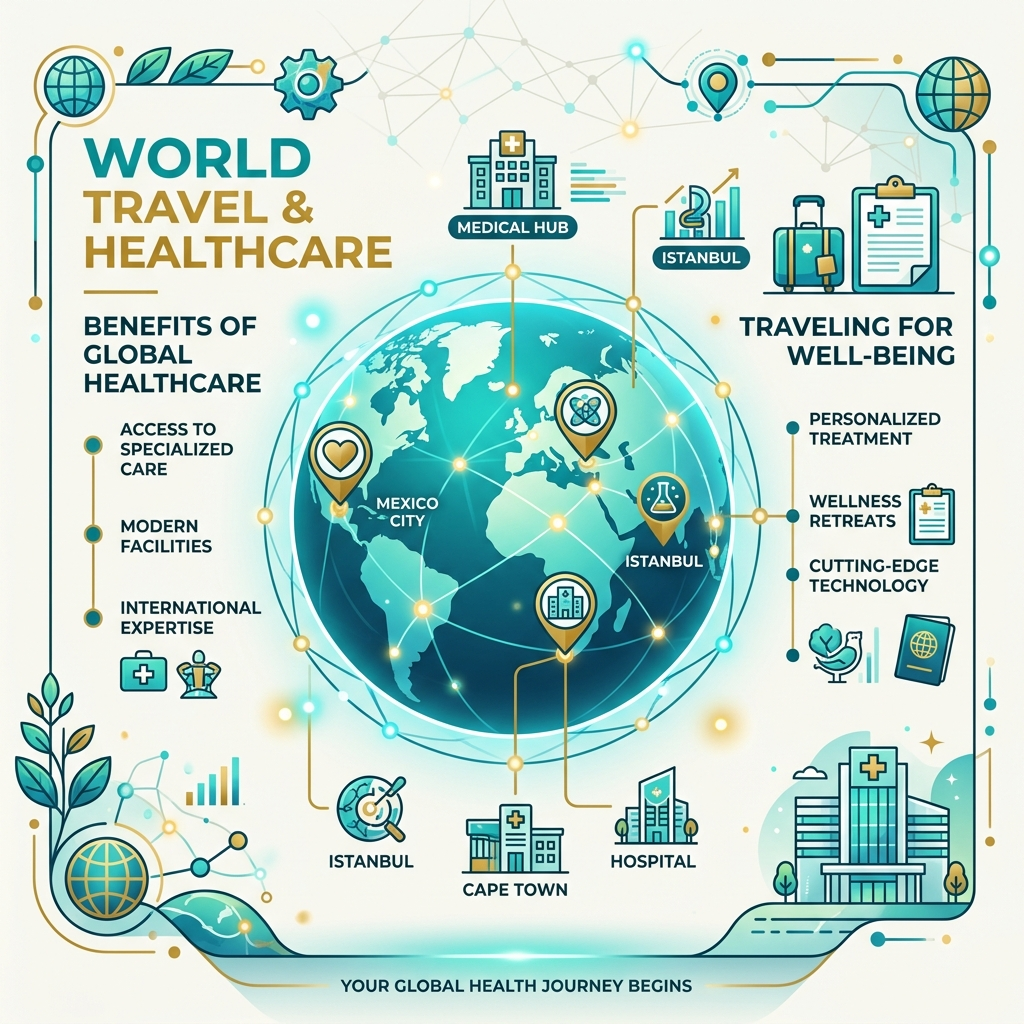
Looking at the world map, some specific routes standing out in the 2026 vision are:
- Turkey (Routes outside Istanbul - Izmir, Antalya, Ankara): Istanbul was long the capital of hair transplantation and aesthetics. But in recent years, Izmir and Antalya have become the new favorites of Europeans, especially with their "treatment + holiday" concept offered in dental tourism, bariatric surgery, and elder care (geriatrics).
- Eastern Europe (Hungary, Poland, Czechia): Especially for patients coming from the UK and Scandinavian countries, these routes are rapidly growing, providing services at EU standards in dental treatments, IVF, and thermal rehabilitation, but at a third of Western European prices.
- Southeast Asia (Specific regions of Malaysia and Thailand): They attract heavy patient traffic from Australia and the Middle East not only for cosmetics but also for complex heart surgeries, orthopedics, and check-up programs. The widespread use of English and high-end luxury hospitals are their biggest advantages.
- The Middle East (Dubai and Abu Dhabi): For those seeking an "Ultra-Luxury" medical experience rather than affordability; they are rising in a different segment with robotic surgery, longevity clinics, and premium health centers offering high privacy.
Safely Discovering New Routes with Healtius
Stepping outside traditional routes and choosing a new destination can create question marks in patients' minds such as "Is the hospital good enough?" or "Is it safe?". Eliminating these doubts is exactly the reason for the existence of the digital health tourism platform Healtius.
- Global Quality Filter: It makes no difference to Healtius whether the hospital is in London or Penang. For an institution to be included in the system, it must have international accreditations (JCI, etc.), up-to-date technological infrastructure, and proven surgical success rates. Every clinic on our platform, wherever it is, is inside the "Healtius Safety Circle."
- Comparative Transparent Costs: When you search for a treatment on the Healtius app, the algorithm doesn't just show you a single city; it also shows alternative (Tier-2) destinations that can offer the same procedure at a more affordable price or in a better recovery environment without compromising on quality. You can make the smartest decision by comparing the total cost side-by-side, including flight tickets and accommodation.
- Local Support Network: Whatever new destination you choose, Healtius does not leave you alone in that city. With a patient representative who speaks your language welcoming you the moment you step into the airport and your digital assistant you can reach 24/7, you feel completely isolated from stress but exceptionally safe.
Conclusion
The world of health tourism is reshaping into a multi-centered, competitive landscape completely focused on the patient's benefit. High-quality medical service is no longer a monopoly of the world's most expensive cities. New destinations that have passed the audits of regulatory agencies, invested in the latest medical technologies, and adopted a patient-centric service approach are distributing world-class healthcare at more affordable budgets.
When planning a cross-border treatment, do not get stuck on stereotyped routes. Discover new horizons where the budget you allocate for your health is spent on your own recovery comfort rather than hospital expenses; where both your body and soul will rest. As Healtius, we are ready to find the most hidden medical pearls of the world and turn them into a flawless health journey for you.
Astronomik Fiyatlar: İsviçre veya ABD'de rutin bir ortopedi ameliyatı, yeni ortaya çıkan bir destinasyondaki aynı standart ameliyattan 5 ila 10 kat daha pahalı olabilir.