In 2026, the intersection of career progression, delayed marriage, and the desire for reproductive autonomy has led to a massive paradigm shift in women's healthcare. At the center of this shift is Oocyte Cryopreservation—commonly known as Egg Freezing.
No longer considered an "experimental" procedure or solely reserved for patients facing chemotherapy, "Social Egg Freezing" has become a proactive, empowering choice for women who want to preserve their fertility until they are emotionally, financially, or relationally ready to start a family.
However, despite its growing popularity, accessing world-class fertility preservation in countries like the United States or the UK remains incredibly difficult due to astronomical costs and restrictive healthcare policies. Consequently, thousands of women are embarking on Fertility Preservation Tourism, traveling abroad to secure their biological clocks in state-of-the-art clinics. As Healtius, we connect women with the world's leading embryology labs. Let's explore why this trend is accelerating and how traveling abroad makes egg freezing accessible.
The Urgency of the Biological Clock
A woman is born with all the eggs she will ever have. As she ages, not only does the *quantity* of eggs decrease, but the *quality* (the genetic health of the eggs) also declines significantly.
- The Peak Years: Female fertility peaks in the twenties and early thirties.
- The Decline: At age 35, there is a noticeable drop in egg quality, increasing the risk of miscarriage or chromosomal abnormalities. By age 40, the chance of getting pregnant naturally in a single cycle drops to about 5%.
Egg freezing halts this biological clock. If a woman freezes her eggs at age 32, those eggs will permanently retain the health, quality, and genetic potential of a 32-year-old, even if she decides to use them via IVF (In Vitro Fertilization) at age 42. It is, essentially, biological insurance.
Why Travel Abroad for Egg Freezing?
The process of freezing eggs involves hormone injections to stimulate the ovaries, followed by a minor surgical procedure to retrieve the eggs, and finally, rapid freezing in a laboratory. The success of this process relies heavily on the technology used in the embryology lab.
Women are crossing borders for three primary reasons: Cost, Technological Excellence, and Legal Flexibility.
1. The Barrier of Cost
In the United States, a single cycle of egg freezing (including the necessary hormone medications, the retrieval surgery, and the first year of storage) can easily cost between $15,000 and $20,000. Because a single cycle may not yield enough eggs (doctors usually recommend freezing 15-20 eggs for a high chance of future pregnancy), a woman might need to undergo two or three cycles, pushing the cost to $50,000.
In premier IVF tourism destinations like Spain, the Czech Republic, Cyprus, or Turkey, the exact same cycle costs between $3,000 and $5,000. This massive price difference democratizes fertility preservation, allowing women to freeze their eggs without liquidating their savings or taking on debt.
2. State-of-the-Art Embryology Labs
The survival rate of an egg during the freezing and thawing process dictates the entire success of the procedure.
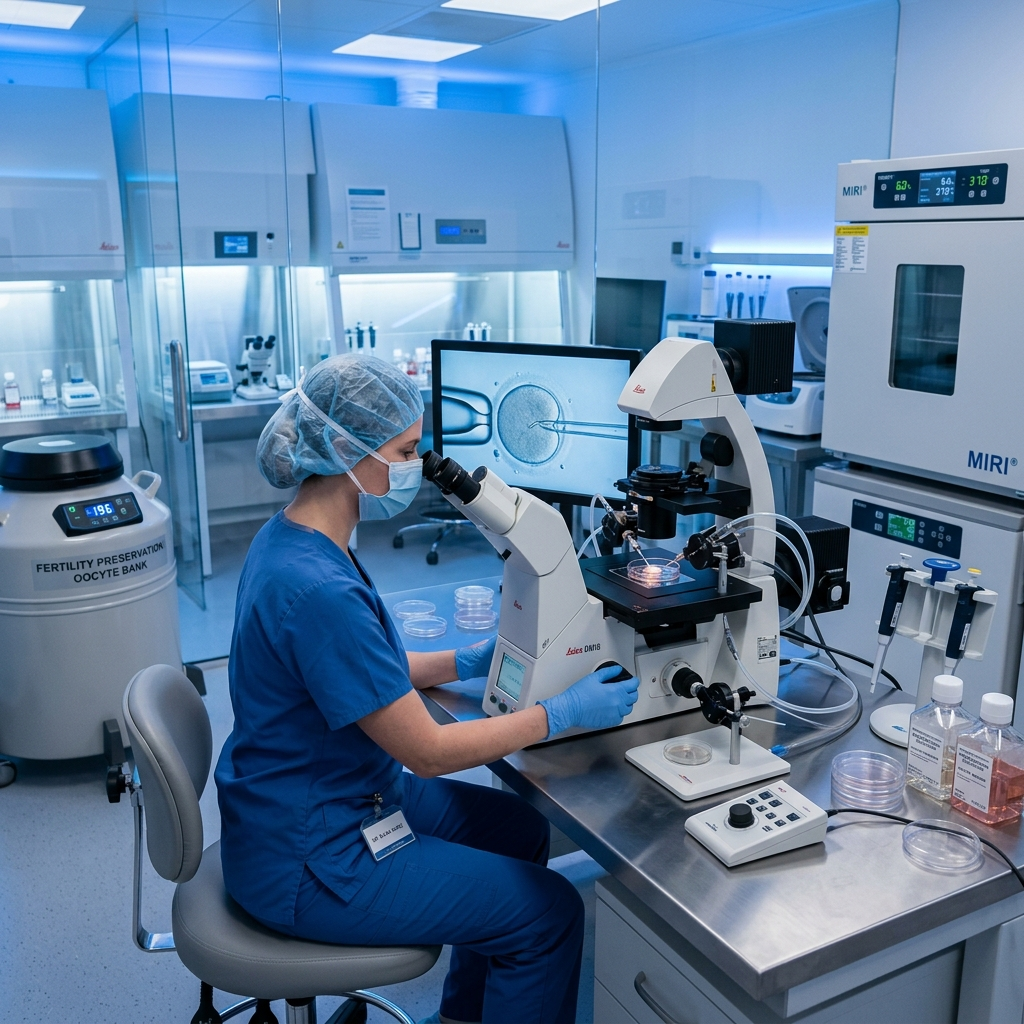
- Vitrification: Advanced international clinics exclusively use "Vitrification," an ultra-rapid freezing technique that instantly turns the egg into a glass-like state, preventing the formation of damaging ice crystals.
- AI and Cleanrooms: Top-tier clinics abroad invest heavily in Class-100 cleanroom laboratories (with air quality superior to an operating room) and AI-assisted incubators. Patients travel to access these specific "Mega-Labs" that boast higher thaw survival rates and fertilization success rates than many smaller, domestic clinics.
3. Legal and Regulatory Environments
Fertility laws vary drastically around the world. In some European countries, strict regulations dictate how long eggs can be stored (sometimes limiting it to just 5 or 10 years) or impose heavy restrictions on who can freeze their eggs (e.g., requiring a medical diagnosis of infertility).
Women frequently travel to countries with more progressive, liberal fertility laws that allow for longer storage periods and offer services on demand without complex bureaucratic hurdles.
The Egg Freezing Journey with Healtius
Egg freezing requires a specific timeline synchronized with a woman's menstrual cycle. Planning this around international travel requires meticulous organization. The Healtius platform is designed to make this medical journey as stress-free as a wellness retreat.
- The Pre-Travel Protocol (Days 1-10):
The journey begins at home. Through Healtius, you consult with a leading international fertility specialist via video call. They will order simple blood tests (like AMH levels to check your ovarian reserve) and an ultrasound at your local clinic. Based on these results, the doctor creates your personalized hormone stimulation protocol. You begin your hormone injections at home, staying in daily digital contact with your Healtius patient coordinator.
- Travel and Monitoring (Days 10-12):
You fly to your destination country a few days before the expected retrieval. Upon arrival, your VIP transfer takes you to the clinic for a final ultrasound to check the size and maturity of your follicles. You spend these days relaxing at your hotel.
- The Retrieval Procedure (Day 13 or 14):
The egg retrieval is a minor, 15-minute procedure performed under light sedation (twilight sleep). An ultrasound-guided needle is used to gently aspirate the eggs from the ovaries. There are no incisions or stitches. You wake up feeling slightly crampy but generally fine, and return to your hotel to rest.
- Freezing and Return:
Within hours, the embryologist evaluates the retrieved eggs. The mature, healthy eggs are instantly vitrified and safely stored in cryotanks. You receive a detailed report on the number of eggs successfully frozen. The next day, you are cleared to fly back home, your biological clock successfully paused.
Conclusion
Egg freezing is one of the most empowering medical technologies available to modern women, but financial and geographical barriers should not dictate who has access to reproductive freedom.
Fertility preservation tourism in 2026 offers a logical, safe, and highly effective pathway to securing your future. By utilizing the Healtius platform, you gain access to the world's most advanced embryology laboratories and experienced specialists at a fraction of the domestic cost. You are investing in your peace of mind, ensuring that when you are ready to start a family, biology will be on your side.